

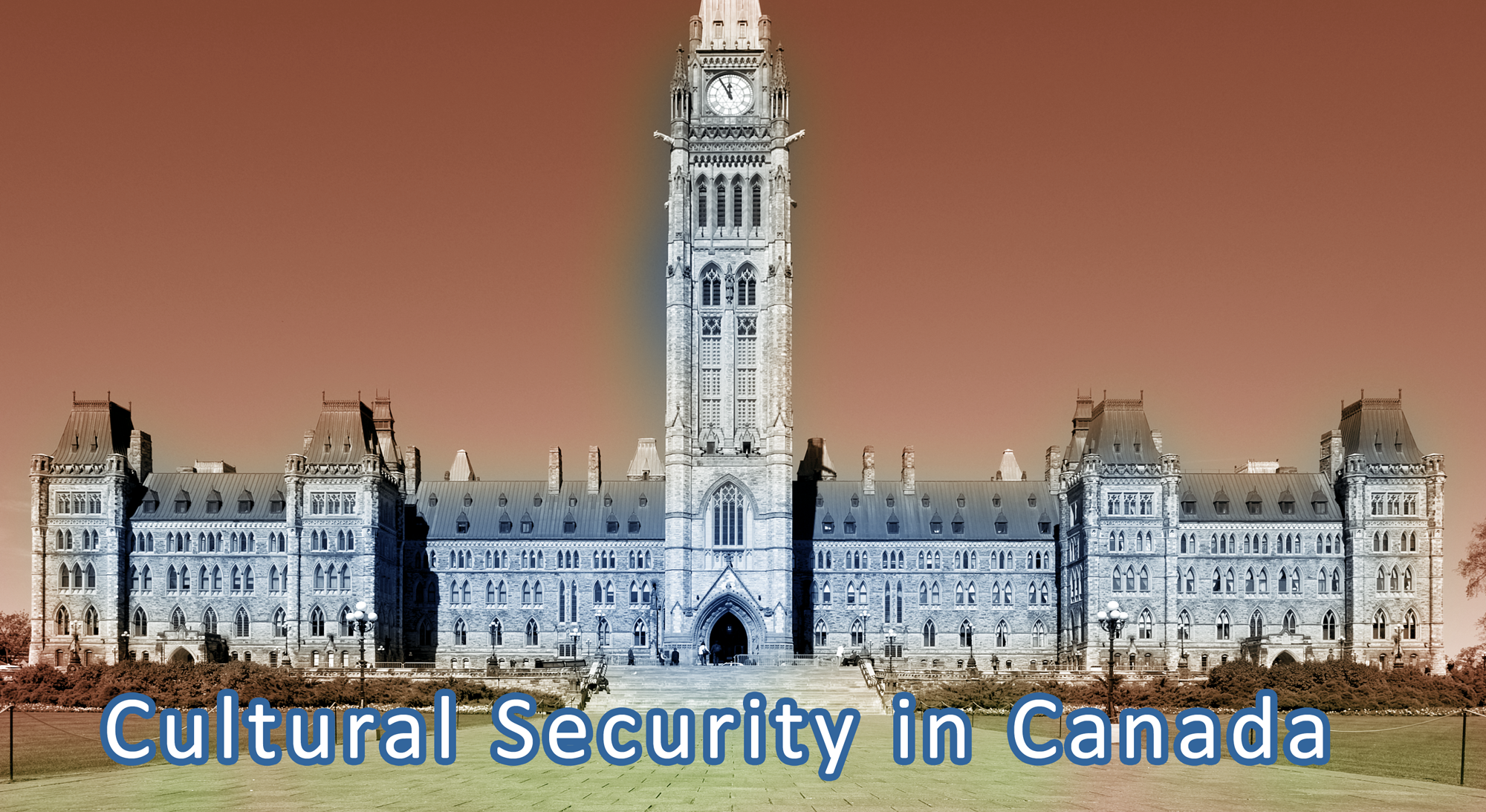
Cultural Security in Canada
Cultural Security in Canada
by clayton windatt
With the current discussions of Canadian sovereignty and agency in geo-political contexts, the concept of national security must be expanded beyond the defense of borders and digital infrastructures to encompass the preservation of social stability within our country through Cultural Security. In no way is this a defensive posture against external influences, but reflecting on societal values and the stability of our country requires a proactive approach towards social cohesion in Canada achieved through robust levels of civic engagement in the arts.
Cultural Security in Canada can be defined as the proactive state of social cohesion achieved when diverse communities see identities reflected and respected within the public spaces. Communities participate in the creation, curation, and consumption of diverse artistic expressions and as a result, citizens build communal resilience and mutual understandings towards maintaining stable, democratic societies.
Considering this a security is not holding it as a static byproduct of policy, but an active approach towards lived experiences generated through consistent engagement within the arts sector. All people move from being passive consumers of culture to active participants, whether through community-led festivals, public mural projects, or the governance of local arts organizations. This subject affects everyone and not just artists and communities weave social fabrics together that can withstand pressures of polarization and social displacement.
The arts sector functions as a vital training ground for social accountability providing structured, creative arenas for public debate. Theater lobbies, gallery receptions, and poetry circles are locations where artists and audiences engage in creative disputes often taking sides in narratives that are very real and personal to all parties, they are forced to confront perspectives that challenge theirs, fostering a culture of intellectual humility and mutual responsibility leading to respect. Unlike the often-polarized and hostile environments of digital forums, artistic spaces allow for the navigation of conflicting narratives through a lens of shared humanity.
This discourse-based process does not seek to eliminate disagreement, but transforms potential conflict into constructive dialogue. The arts are very accustomed to debate, critique and polarized opinions which allow for volatile subjects to be addressed through discourse that may not normally be discussed within a community. This allows participants to develop the civic muscles necessary to hold one another accountable without resorting to dehumanization typically followed by social fracture.
This is one of the great strengths of the arts sector as a crucial part of a healthy society; it allows for conflicting opinions to be heard with merits measured by peers as opinions form, soften or at times consensus is reached. The direct result of debate is a significant increase in shared understandings, which serves as a primary deterrent to systemic and interpersonal violences. As individuals grapple with the complex stories of their neighbors through the arts, the "other" is humanized, making the path toward aggression increasingly difficult to justify.
In the Canadian arts context, where historical grievances and modern inequities can create volatile tensions, the arts offer a safety valve, a space where pain can be expressed, witnessed, and validated by the collective. This shared witnessing creates a profound sense of social belonging that acts as a buffer against radicalization and civil unrest. Prioritizing the arts as a site for difficult conversations, Canada effectively invests in a non-traditional security infrastructure that preempts violence by strengthening the empathetic bonds of its people, ensuring that mutual respect and coexistence remain important and valued.
The efficacy of Cultural Security as a pillar of Canadian stability is fundamentally tied to the consistency and scale of the country's public investment. Funding for the arts serves as the "fuel" for the civic engagement engine, lowering barriers for marginalized groups to engage and ensuring that artistic spaces remain accessible as public commons.
In Canada, every dollar invested in the arts by the federal government is estimated to generate significant returns in economic activity, but its social yield is even more profound. Reliable funding allows arts organizations to move beyond survival mode and into the full exploration of not-for-profit mandates conducting elaborate community building and facilitating social accountability in a region bridging demographic divides.
When the state treats arts funding as a strategic priority, it is effectively paying for the maintenance of the social fabric, ensuring that the values of pluralism are not just theoretical ideals but practiced daily realities.
The lack of confident support towards funding the arts in Canada presents a direct threat to national stability. Low or unpredictable resources reduce public infrastructures and create communities where social isolation and polarization can flourish.Additionally, when public support is cut, arts organizations are forced to prioritize commercially viable content reducing the presentation of challenging, discourse-heavy works that fosters social accountability.
This retreat from discourse-driven actions that seek to explore controversial or sensitive issues within public debate leaves a void that is often filled by digital platforms, where narratives are frequently engineered for outrage rather than understanding.The danger of an underfunded arts sector is the gradual loss of social cohesion that holds a diverse population together.
Decreasing investment in the arts leads to a precarious state impacting the most vulnerable first, silencing the voices necessary for a complete and inclusive national story. When community-led festivals disappear and local galleries close, the civic muscles of a society begin to atrophy, making the population more susceptible to the dehumanizing rhetoric that precedes civil unrest and can lead to division or even violence.
Cultural Security in Canada must be recognized as a vital and necessary area of exploration and financial investment. The arts are a critical infrastructure and a vital defense preempting conflicts through ensuring everyone in Canada feels seen, heard, and invested in the collective future of the nation. Funding the arts is not merely a budgetary issue, it stabilizes a strategic vulnerability within our country.
Funding the arts is not supporting an ornamental luxury, or creative fancy for the privileged, it is a necessity. Cultural Security must be viewed as a critical infrastructure fostering healthy ecosystems of artistic engagement within Canada. Acting on this secures Canada’s future as a more stable, unified, and democratic state where every citizen has a stake in the ongoing national story of this land.